Rare paediatric heart disease

Restoring relaxation to the stiff heart

Lusitro is developing HcTnI-C27 (C27), a peptide derived from the heart's own troponin I and based on the research of Prof. Jian-Ping Jin (University of Illinois Chicago), as a potential treatment for children with TNNI3-related restrictive cardiomyopathy. Our ambition is a treatment that reaches patients and remains accessible.

Lusitropy (from Greek lusis, loosening): the ability of the heart muscle to relax between beats. It is exactly this that fails in restrictive cardiomyopathy, and exactly this that C27 aims to restore.

STIFF RELAXED

Our story

Isis and Seppe

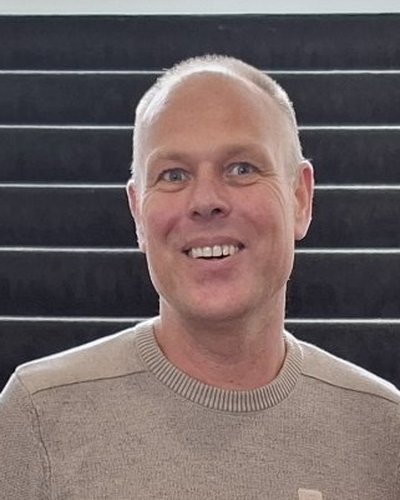
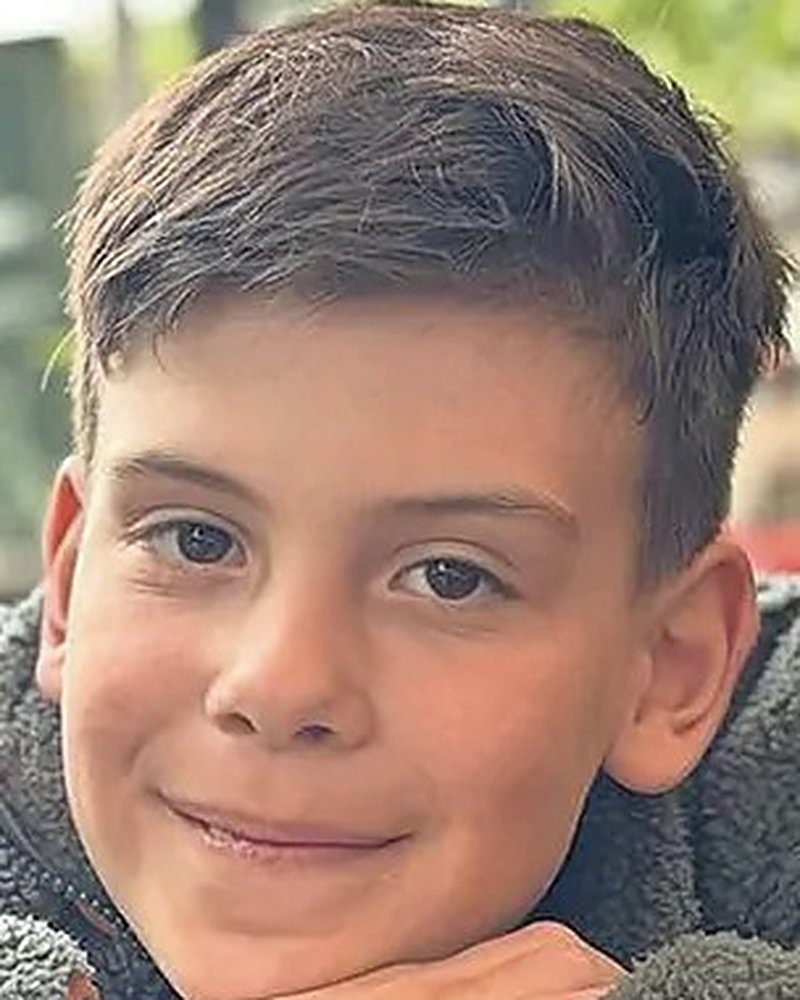
Isis and Seppe are two Dutch children living with restrictive cardiomyopathy (RCM), each caused by a different pathogenic variant in the TNNI3 gene. In RCM the heart muscle becomes stiff and cannot relax properly between beats, so the heart struggles to fill with blood. Today there is no treatment that addresses the cause of the disease.

Mark Hage, Isis's father, began searching for a way forward. That search led to the work of Prof. Jian-Ping Jin, who has spent many years studying cardiac troponin I, the protein affected by these variants, and who developed a peptide that targets the underlying mechanism.

To carry this work from the laboratory towards patients, Mark founded Lusitro B.V. Isis and Seppe come first. The work is driven by urgency, but every step is guided by evidence. Explained in plain words for families and patients →

Isis, smiling
Seppe, smiling

Isis and Seppe. Photos shared with the consent of both families.

The science

C27: a peptide from the heart's own protein

In TNNI3-related RCM the heart's contractile filaments are too sensitive to calcium, so they do not switch off fully between beats. HcTnI-C27 is a short peptide derived from the heart's own troponin I that is designed to restore that switch.

01 · ORIGIN

Based on a natural human protein

C27 corresponds to the last 27 amino acids (184–210) of human cardiac troponin I, a regulatory region that binds tropomyosin in a calcium-dependent way.

02 · PUBLISHED EVIDENCE

Relaxation without loss of force

In published biochemical studies and isolated cardiac-muscle preparations from the Jin group, C27 bound tropomyosin and reduced the calcium sensitivity of the contractile filaments, promoting relaxation without lowering maximal force. These are experimental findings; C27 has not been tested in intact patient tissue or in people.

03 · PATIENT MODELS

Patient-specific heart models available for C27 evaluation

Researchers at UMC Utrecht have generated and characterised stem-cell (iPSC) lines from both children and two unaffected relatives. Together with Amsterdam UMC, engineered heart tissues will be grown from these cells. Before any C27 effect can be interpreted, the cells must be mature enough, including expression of the adult cardiac form of troponin I. C27 has not yet been tested in these models.

Beyond TNNI3-related RCM

TNNI3-related restrictive cardiomyopathy is the first indication we are working on. Excessive calcium sensitivity of the contractile filaments also plays a role in some other cardiomyopathies, such as hypertrophic cardiomyopathy, and possibly in heart failure with preserved ejection fraction (HFpEF). Whether C27 could help in any of these conditions is unknown and would need to be tested separately for each one.

C27 is an investigational compound. It has not been tested in patients and is not an approved treatment. Its safety and efficacy in humans are unknown.

Key publications

  • Wong S, Feng H-Z, Jin J-P. The evolutionarily conserved C-terminal peptide of troponin I is an independently configured regulatory structure to function as a myofilament Ca2+-desensitizer. J Mol Cell Cardiol 2019;136:42–52. doi:10.1016/j.yjmcc.2019.09.002
  • Hornos F, … Jin J-P. The muscle-relaxing C-terminal peptide from troponin I populates a nascent helix, facilitating binding to tropomyosin with a potent therapeutic effect. J Biol Chem 2021;296:100228. doi:10.1074/jbc.RA120.016012
  • Patient-specific models: Starčević P, … Stillitano F. Generation and characterization of induced pluripotent stem cell (iPSC) lines from two symptomatic carriers of pathogenic TNNI3 variants and two non-carrier relatives. Stem Cell Res 2026;93:103961. doi:10.1016/j.scr.2026.103961
  • Related mechanism (N-terminal truncation of troponin I): Feng H-Z, Huang X, Jin J-P. N-terminal truncated cardiac troponin I enhances Frank-Starling response by increasing myofilament sensitivity to resting tension. J Gen Physiol 2023. doi:10.1085/jgp.202012821

Roadmap

From the lab towards the first patients

We are building the shortest responsible route to treatment: careful enough to protect patients, focused enough to matter in time for these children.

Achieved so far

  • Published biochemical and cardiac-muscle evidence for the C27 mechanism
  • Patient-specific stem-cell lines from both children and family controls, generated and published
  • A joint research proposal with Dutch academic partners (C27-IMAGE), submitted November 2026
  1. 1

    Patient-specific biological validation Next

    Test C27 dose-response, relaxation and contractile force in qualified TNNI3 patient-specific heart cells and engineered heart tissues, compared with family controls.

  2. 2

    PET tracer development Planned

    Develop a radiolabelled form of C27 and verify its analytical quality, its stability and that it behaves biologically like unlabelled C27.

  3. 3

    Regulatory and clinical-enabling work Planned

    Define and generate the minimum manufacturing (CMC), non-clinical safety and regulatory evidence needed for an exploratory microdosing study.

  4. 4

    Human Phase 0 PET microdosing Planned

    Subject to approvals and predefined decision gates, a very small, non-therapeutic dose of labelled C27 would show its uptake in the heart, pharmacokinetics, metabolism, distribution in the body and radiation dose. This study is not designed to show whether C27 works as a treatment. Who takes part depends on independent regulatory, ethical and clinical assessment.

  5. 5

    Therapeutic development decision Decision

    The biological and human-exposure evidence comes together in a GO, ADAPT or STOP decision. Further development would require production at therapeutic dose under GMP, additional toxicology and clinical efficacy studies before any regulatory approval.

Steps 1 to 4 form the proposed C27-IMAGE project (2027–2030, if funded). Each step depends on the results of the previous one. These are planned steps, not guaranteed outcomes.

Collaboration

Working with leading research partners

Lusitro connects the original invention with the academic, clinical and regulatory expertise needed to develop it. The status of each relationship is stated below.

Chicago, USA

University of Illinois Chicago

Prof. Jian-Ping Jin

Inventor of the C27 technology and senior author of the key C27 publications.

Inventor

Utrecht, NL

UMC Utrecht

Generated and characterised the patient-specific stem-cell lines and provides the heart-muscle cells. Proposed partner, with Amsterdam UMC, for testing C27 in engineered heart tissues.

Ongoing research

Amsterdam, NL

Amsterdam UMC

Long-term engineered heart tissue models, radiochemistry, PET imaging and pharmacokinetics. Proposed partner for testing C27 in heart tissue, tracer development and the Phase 0 imaging study.

Proposed partner

Leiden, NL

Orfenix

Translational R&D: turning the project results into follow-on study designs, an R&D roadmap and a target product profile.

Proposed partner

Utrecht, NL

Netherlands Heart Institute

PRECISE consortium

Proposed coordinator of the joint public-private research proposal C27-IMAGE, submitted to the FORESIGHT programme in November 2026. PRECISE, the national consortium for inherited heart disease, links paediatric and adult cardiology, patient cohorts and research models.

Under scientific evaluation

The Netherlands

Dutch Heart Foundation

Co-funded the underlying research by matching the funds raised by Stichting Tikkertje, which helped make the patient-specific models possible. This is not a commitment to fund the proposed C27 programme.

Funded underlying research

Status as of November 2026. Unless stated, no signed agreement, funding commitment or endorsement by these institutions is implied.

Why a public-private partnership?

Developing a new medicine is expensive. In the FORESIGHT programme of Health~Holland, companies and academic centres work together, and public funding covers a large part of the costs of the academic research. The partners contribute their own time, facilities and materials, and Lusitro pays its own share as the company partner. A project that would be out of reach for any single party becomes feasible together, and every contribution to Lusitro works as leverage for the whole research programme.

C27-IMAGE: timeline

  1. Nov 2026Pre-proposal submittedTo the FORESIGHT programme (Health~Holland). Passed the eligibility check on 4 November.
  2. End Nov 2026Outcome scientific evaluationDecision on an invitation to submit a full proposal.
  3. Early 2027Full proposalSecond round, if the pre-proposal is selected.
  4. 2027Funding decisionAfter review of the full proposal.
  5. Jul 2027 – Jun 2030Project runs36 months, roadmap steps 1 to 4, if funded.

Planned dates; they depend on the programme schedule and on the outcome of each round.

What Lusitro does

An active translational R&D partner

Lusitro contributes technical expertise and brings the evidence from all partners together into development decisions.

Mark Hage

Mark HageFounder and director. Background in high-tech systems R&D, test design and data-driven engineering. Father of Isis.

Lusitro B.V. holds the industrial role in the programme: it aims to license the C27 technology and to take responsibility for its further development towards patients.

  • Development strategy and regulatory architecture: a phased, evidence-linked route to a first exploratory clinical study.
  • Exposure and dose integration: bringing preclinical and human exposure data together for development decisions, alongside the partners’ PET modelling specialists.
  • Data analysis and evidence integration across patient models, imaging and preclinical studies.
  • GO / ADAPT / STOP decision frameworks, quality by design and technical risk management.
  • Coordination of research partners, materials and external expertise.

Lusitro has no in-house manufacturing or clinical trial operations; these are provided by qualified partners and contractors.

Our mission

An accessible medicine

Treatments for rare diseases are often priced out of reach. Lusitro was started by a parent, not by investors, and we intend to keep it that way in spirit: our ambition is to develop an accessible and economically sustainable treatment for patients with rare cardiomyopathies.

Short peptides can often be produced by chemical synthesis, which may help keep costs reasonable compared with more complex therapies. Whether that holds for C27 still has to be shown. If C27 proves effective, we want that advantage to reach patients.

Support this work

What your support makes possible

  • Maturing and validating the patient-specific heart cell models
  • Producing the C27 peptide for research and preclinical studies
  • Biodistribution and safety studies
  • Preparing an exploratory first-in-human study and the regulatory dossier

Donations are made through Stichting Tikkertje, the foundation that funds research towards a treatment for Isis and Seppe. To support the C27 research specifically, please mention “C27” with your donation.

Lusitro is seeking support. In the research project, Lusitro pays its own share as the company partner, without subsidy. Donations to Stichting Tikkertje marked “C27” are earmarked for the C27 research, including Lusitro’s contribution to the C27-IMAGE project. Foundations, funds and individuals who want to help bring C27 to patients are warmly invited to get in touch.

Are you a foundation, patient organisation or research partner? We would welcome a conversation.

Contact about support mark@lusitro.com